
6–7 days: possible, but focused
A week can work if you keep the route tight: roughly three nights Tokyo, two nights Kyoto and one or two nights Osaka. You will see the headline sights, but there is little room for weather changes, long meals or spontaneous detours.
8–10 days: the comfortable first trip
This gives Tokyo time for more than Shibuya and Asakusa, Kyoto enough space for temples and neighbourhoods without rushing, and Osaka a proper evening and food-focused day. It also gives you more flexibility with train timings.
10–14 days: start adding depth
With more time, add Nara from Kyoto or Osaka, a Fuji-area stay, or another city rather than simply adding more attractions to each day. Japan rewards unplanned wandering as much as checklist sightseeing.
Where should you sleep?
Tokyo and Kyoto deserve multiple nights. Osaka can be a day trip from Kyoto, but staying overnight gives you a different after-dark atmosphere and easier access to the food scene.
Our rule for first timers
Do not try to turn every famous place into a separate overnight stop. Build around two or three strong bases and use Japan’s rail network for day trips.
What to do after you land
For Japan, the easiest arrival is usually: data first, yen second, transport card/rail plan third, taxi only if it genuinely makes sense for your luggage or arrival time.
SIM / eSIM
At Haneda Terminal 3, prepaid SIM and Wi-Fi services are available in the 2F Arrival Lobby. Narita has SIM-card counters and vending machines across the international terminals. An eSIM installed before departure is the quickest option if your phone supports it.
Money & cards
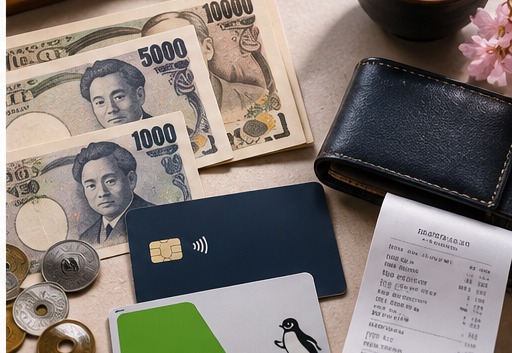
Haneda Terminal 3 has 24-hour currency exchange in the 2F Arrival Lobby. Narita has ATMs and exchange counters in the arrival areas of Terminals 1-3. Seven Bank and other international-card ATMs are useful for withdrawing yen instead of carrying a large amount of cash.
Airport taxi / transfer
Haneda T3: follow Taxi signs from the 2F access hall down to the 1F taxi area; general taxis use Stop 21. App-dispatched rides use the dedicated pickup shown in the app (currently P5 Parking, 8F for T3). Narita has signed taxi stands at every terminal, including T1 Stand 15 and T2 Stands 28/31-A.
Your first 15 minutes
Turn on data, withdraw a modest amount of yen, set up your IC/transit payment if needed, then use rail/monorail for most city trips unless luggage, late arrival or accessibility makes a taxi the better choice.
Travel information can change. We review practical details regularly and recommend checking official sources again before departure.